
The short version
IFTTT and Make both connect apps, but they are built for different jobs. IFTTT is organised around applets: one trigger, then one or more actions, with optional filter code. [2] Make is organised around scenarios: a chain of modules you can split with routers and gate with filters between any two modules. [5][6]
Both now meter usage in credits and both give 1,000 free credits a month. [1][3] The difference is what you can build with them, not the size of the free allowance.
| IFTTT | Make | |
|---|---|---|
| Free plan | 1,000 credits/month, unlimited applets, hourly polling [1] | 1,000 credits/month [3] |
| Paid entry price | Starter $25.08/year billed annually [1] | Core; check the live grid [3] |
| Fastest check | Every 5 minutes on Pro and Pro+ [1] | Interval minimum depends on plan; some triggers run immediately [7] |
| Workflow shape | One trigger, one or more actions [2] | Chain of modules, routers split into routes [6] |
| Conditional logic | Filter code in TypeScript can skip actions or change values [2] | Visual filters between modules; router routes with a fallback [5][6] |
| Usage unit | Credits for applet runs, MCP and AI [1] | Credits per module action, mostly 1 per action for non-AI apps [4] |
| Free modules | Not documented per step [1] | Router and error handlers use no credits [3] |
Published plans and what the credits buy
IFTTT lists four plans. Free includes 1,000 credits a month with hourly polling. Starter is $2.09 a month billed annually ($25.08 a year) with 5,000 credits and 15-minute polling. Pro is $5.49 a month billed annually ($65.88) with 20,000 credits and 5-minute polling. Pro+ is $13.99 a month billed annually ($167.88) with 100,000 credits, 5-minute polling and multiple accounts per service. [1] The page shows a Save 30% label on the yearly toggle. [1]
IFTTT says applet runs, MCP usage and AI features all draw from the monthly credit allowance, but the plans page does not say how many credits a single applet run uses. [1] Budget conservatively until you see your own usage.
Make's Free plan also has 1,000 credits a month, and its FAQ says annual prepayment is cheaper than monthly. [3] Make documents the cost per step: by default one operation is one credit for non-AI apps, with some AI modules using more. [4] Reading, searching, creating, updating and deleting data all count, while routers and error handler modules do not. [3] When credits run out, scenarios stop until credits are added. [3]
Where IFTTT stops: the structure of an applet
IFTTT's applet documentation says an applet can only have one trigger. You can add more actions with the Add action button, and filter code runs when the applet runs to read trigger data, change action field values or skip actions. [2] Filters are written in TypeScript and run in an isolated environment with a short timeout and no I/O methods. [2] The same documentation describes queries, which fetch extra information for filtering, as coming soon. [2]
That is enough for if-this-then-that-and-that: log a smart-home event and send a notification, or save a post and add it to a sheet. It is awkward when the workflow needs to look something up mid-run, branch into different chains of steps, or loop over a list of items.
What Make adds for business workflows
In Make you click the line between two modules to add a filter, and only bundles meeting its conditions continue; condition operators include exists, text, number, date and array comparisons. [5] A router branches the scenario into several module chains, processes routes in the order you set, and can have a fallback route for data that matches no other route. [6]
Scheduling is more granular too: Make offers regular intervals, daily, weekly, monthly, specified dates and on-demand runs, with an Immediately option for some triggers; for instant triggers the default cap is 100 runs started per minute, which you can change. [7] The minimum interval depends on your plan. [7]
One workflow built on both
Example: a new website enquiry should be added to a Google Sheet; if the stated budget is above a threshold, post it to the sales channel in Slack, otherwise send a polite email reply. This assumes both tools offer triggers and actions for your form app, Google Sheets, Slack and email; check each tool's app directory before building.
On IFTTT you would create one applet with the form trigger and three actions (add row, post to Slack, send email), then write filter code that skips the Slack action when the budget is low and skips the email action when it is high. [2] It works, but the branching lives in code, and if you later need to look up the lead in a CRM first, queries are not yet available in the documented applet builder. [2]
On Make you would build trigger, Google Sheets add row, then a router with two routes: a filter for budget above the threshold leading to Slack, and a fallback route leading to the email module. [5][6] Credit cost per enquiry is about 3: one for the trigger reading data, one for the sheet row, zero for the router and one for whichever branch runs. [3][4] At 300 enquiries a month that is about 900 credits, inside the 1,000 free credits, with no code. [3]
| Step | IFTTT | Make | Make credits [3][4] |
|---|---|---|---|
| New enquiry arrives | Trigger (polled hourly on Free) [1] | Trigger module | 1 |
| Add to Google Sheet | Action 1 | Add row module | 1 |
| Decide high or low budget | Filter code skips actions [2] | Router with filter and fallback [6] | 0 |
| High budget: post to Slack | Action 2 | Route 1 | 1 if taken |
| Low budget: email reply | Action 3 | Fallback route | 1 if taken |
| Total per enquiry | Not documented [1] | About 3 |
Who should stay on IFTTT and who should move
Stay on IFTTT if your automations are personal, smart-home or social posting chains with one trigger and a couple of actions, if an hourly to 5-minute check is fine, and if a predictable annual price under $170 matters more than flexibility. [1]
Move to Make if the workflow is part of how your business serves customers: you need several branches, a fallback path, data transformation, scheduled batches or error handling, or more than one person maintaining it. Make's per-action credit model is transparent enough to forecast cost before you build. [3][4]
Skip both if your team already lives in another vendor's suite with its own automation tool, or if the workflow is a single app-to-app sync the app offers natively.
Watch demos / Official walkthroughs
See how the tools work.
Videos load from YouTube only when you press play. These are provider videos, not our own product tests.
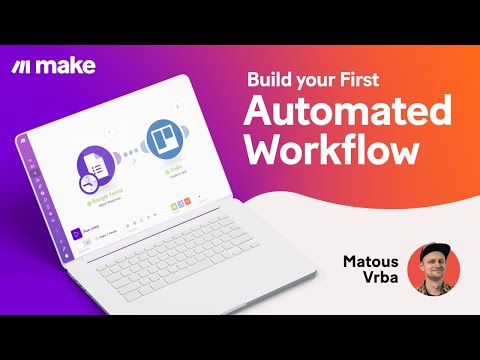
Make / Official video
Make—Building Your First Automated Workflow from Scratch
What to look for: Follow how modules connect and how data moves through the first workflow.
Watch on YouTubeQuestions before you decide
Is IFTTT cheaper than Make?
IFTTT's paid plans are billed annually at $25.08 (Starter), $65.88 (Pro) and $167.88 (Pro+) a year. Make's dollar grid did not load in the page text we fetched, so compare it live; both have a free plan with 1,000 credits a month.
Can IFTTT do multi-step automations?
Partly. IFTTT documentation says an applet can only have one trigger but can have more than one action, and filter code can skip actions or change their values. It does not offer Make-style routers that send data down separate chains.
How often do IFTTT applets check for new data?
IFTTT lists polling every hour on Free, every 15 minutes on Starter and every 5 minutes on Pro and Pro+.
Do Make filters and routers cost credits?
Make's pricing FAQ says the router module and error handler modules do not consume credits. Most other module actions cost 1 credit each for non-AI apps.
Sources & verification
Product details and prices can change. Check the linked provider before buying.
- IFTTT: Plans Accessed 30 Oct 2026
- IFTTT Docs: Applets Accessed 30 Oct 2026
- Make: Pricing and FAQ Accessed 30 Oct 2026
- Make Help: Credits Accessed 30 Oct 2026
- Make Help: Filtering Accessed 30 Oct 2026
- Make Help: Router Accessed 30 Oct 2026
- Make Help: Schedule a scenario Accessed 30 Oct 2026
Sources link directly to providers. Product buttons may use separately labeled affiliate links. Read our disclosure.